
Anil Jain Refex outlines India’s domestic energy security priorities
Refex Industries Limited Managing Director Anil Jain examines how domestic bioenergy, energy efficiency and resource recovery can strengthen India’s long-term energy security.
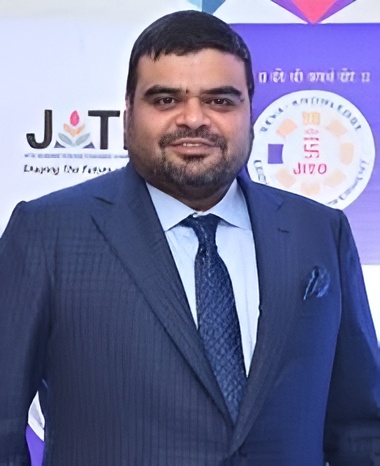
New Delhi, July 28, 2026 — Anil Jain, Managing Director of Refex Industries Limited, authored an analysis published on Indian Express Education on July 27, 2026, examining how domestic bioenergy, energy efficiency and resource recovery could strengthen India’s long-term energy security amid global supply disruptions and volatile fossil-fuel markets.
As global energy markets continue to face geopolitical uncertainty and supply-chain disruptions, Anil Jain, Managing Director of Refex Industries Limited, has highlighted the importance of expanding domestic energy resources, improving energy efficiency and strengthening resource recovery to support India’s long-term energy security.
In the analysis, Anil Jain Refex discusses the need for India to move beyond a narrow focus on diversifying fossil-fuel imports and develop a broader energy-security strategy centred on domestic innovation, low-carbon energy and efficient resource utilisation.
India remains heavily dependent on imported crude oil, making the economy vulnerable to international price fluctuations and disruptions in global energy supply. While sourcing crude oil from multiple countries can reduce dependence on individual suppliers, long-term resilience will also depend on increasing the country’s ability to produce, recover and conserve energy within its own economy.
The article identifies three complementary priorities for strengthening energy resilience: diversifying energy supplies, expanding domestic low-carbon energy sources and improving energy efficiency across industries and communities.
Bioenergy was highlighted as a major opportunity for reducing dependence on imported fuels. Agricultural residues, livestock waste and municipal organic waste can be converted into useful energy resources, including compressed biogas. Expanding these systems could support domestic energy production while creating economic value from materials that may otherwise remain underutilised.
India has introduced policy initiatives to encourage the development of bioenergy and compressed biogas. However, scaling these opportunities will require stronger feedstock collection systems, rural logistics, supply-chain infrastructure, financing and long-term market arrangements.
The article also emphasises that energy security is influenced by how efficiently energy is consumed. Improvements in industrial efficiency, advanced cooling technologies and the adoption of lower global-warming-potential refrigerants can help reduce electricity demand while supporting environmental objectives.
Resource recovery and circular-economy practices were identified as additional components of a more resilient energy system. The productive use of industrial by-products such as fly ash can improve resource efficiency, reduce waste and lower dependence on energy-intensive raw materials.
According to the article, India’s energy transition should be viewed not only as an environmental objective but also as an economic and strategic priority. A stronger domestic energy ecosystem could help reduce exposure to volatile international markets while supporting sustainable growth and long-term economic resilience.
The article concludes that India’s future energy security will depend on more than expanding the number of countries from which it imports fuel. Greater resilience can be achieved by unlocking the energy potential available within the domestic economy through bioenergy, renewable technologies, resource efficiency and innovation.
Anil Jain is the Managing Director of Refex Industries Limited, a publicly listed company with operations across electric mobility, renewable energy, environmental services and industrial logistics. Through its sustainability-focused businesses, the group continues to engage with evolving policy, infrastructure and market trends related to India’s energy transition.
Source: Read the original article, “Energy Security in an Uncertain World: Why India Must Diversify Beyond Imported Fossil Fuels,” published on Indian Express Education.