
As Older Pennsylvania Housing Stock Faces Persistent Moisture Problems, New Gettysburg Guide Maps Mold Remediation Process, Costs, and Contractor Vetting
A new guide details mold remediation in Gettysburg, PA, covering the process, cost ranges, and contractor hiring criteria as older regional housing stock continues to face moisture issues.
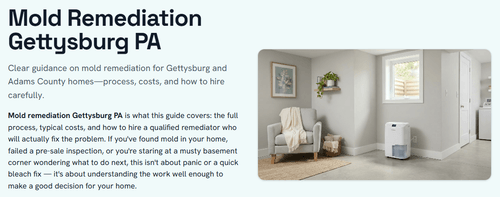
GETTYSBURG, PA — October 8, 2026 — With moisture-related problems continuing to surface across a region whose housing stock includes many older structures, a new informational guide released this week offers property owners a detailed overview of mold remediation in Gettysburg, Pennsylvania, spanning the full remediation process, typical cost ranges, and the criteria for choosing a qualified contractor.
Industry data shows that mold remediation generally follows a defined sequence: assessment, containment, removal of affected materials, cleaning, and post-remediation verification. According to the guide, effective remediation must address the underlying moisture source, otherwise the problem is likely to return.
Understanding the Remediation Process
The guide lays out a standard remediation sequence: initial inspection and moisture mapping, containment of affected areas, removal of mold-damaged materials, HEPA vacuuming and surface cleaning, and a final clearance inspection. It notes that the scope of work depends on the size of the affected area and the materials involved.
Industry sources indicate that remediation projects in south-central Pennsylvania often range from small-scale jobs under 10 square feet, which may be handled with minor repairs, to larger projects exceeding 100 square feet that typically require professional containment and disposal.
Cost Factors and Regional Context
Typical costs for mold remediation in the Gettysburg area vary based on square footage, accessibility, and the type of materials affected. The guide cites common price ranges from several hundred dollars for minor surface treatment to several thousand dollars for extensive contamination in crawl spaces, basements, or attics.
Additional costs may include moisture source repair, such as fixing leaks or improving drainage, and post-remediation testing. The guide advises obtaining multiple written estimates that specify the scope of work, containment methods, and clearance criteria.
Hiring a Qualified Remediator
When selecting a contractor, the guide recommends verifying state licensure where applicable, insurance coverage, and industry certifications such as those from the Institute of Inspection, Cleaning and Restoration Certification (IICRC). It also suggests requesting references from similar projects and confirming that the contractor will perform post-remediation verification.
“Property owners should prioritize contractors who follow established remediation standards and document each stage of the project,” said a spokesperson for the guide’s publisher. “Clear scope definitions and independent clearance testing are key to ensuring the issue is resolved.”
About the Guide
The guide is available online and is intended for homeowners, property managers, and real estate professionals in the Gettysburg area. It includes checklists for evaluating contractors and a summary of relevant industry standards, including those published by the IICRC and the U.S. Environmental Protection Agency.
Media Contact
Contact person: Nick
Company: Mold Remediation in Gettysburg, PA.
Website: https://moldremovalingettysburgpa.com